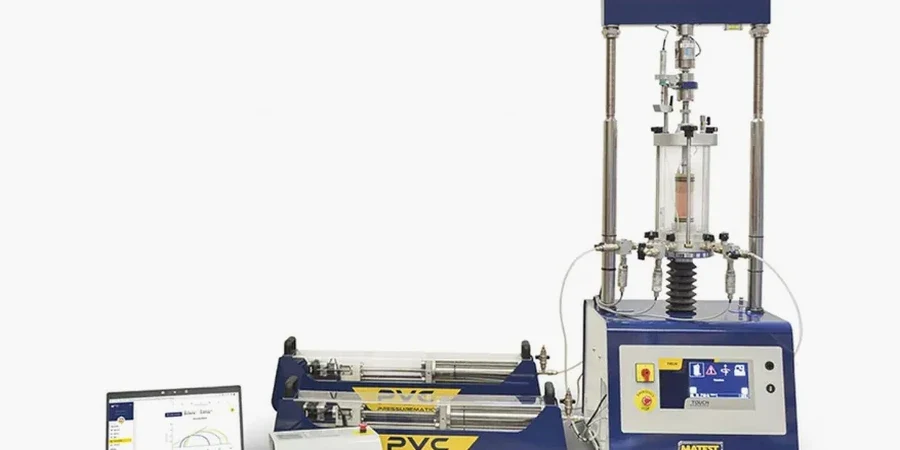
Designing a foundation in Port Dalhousie near the lakefront is nothing like building up on the escarpment in Western Hill. The silty clays near Martindale Pond behave entirely differently under load than the shale fill common in the older north-end neighborhoods. That difference comes down to shear strength, and the only reliable way to measure it is a consolidated-undrained triaxial test. We run these tests routinely for projects across St. Catharines, from the industrial corridors along the Welland Canal to residential subdivisions pushing into the former orchard lands. A proper CPT test can flag weak zones, but it doesn't replace the lab — you need undisturbed samples to know how the soil will actually perform when saturated and stressed. St. Catharines sits on a mix of glaciolacustrine deposits and shale bedrock, and the groundwater table is high enough in spring to change everything. We pair the triaxial test with slope stability analysis when the site has more than a meter of grade change, which describes half the lots in this city.
Effective stress parameters from a triaxial test are the difference between a foundation that performs and one that settles unexpectedly in St. Catharines' glaciolacustrine clays.