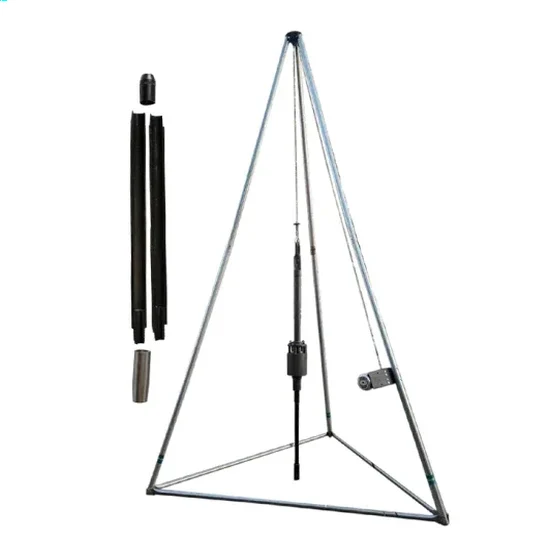
The subsurface profile under St. Catharines shifts dramatically over short distances. A site near the dense till of the Lake Iroquois Plain often reveals high blow counts within 4.5 metres, while a borehole advanced into the glaciolacustrine silts of the Merritton corridor can register N-values below 8 for the first 9 metres. These contrasts demand a stratigraphic investigation that separates stiff Halton Till from soft Twelve Mile Creek valley infill. Standard Penetration Testing provides that resolution: a split-spoon driven 450 mm by a 63.5 kg hammer, recording blows per 150 mm. The resulting N60, corrected for rod energy, overburden, and sampler configuration, feeds directly into bearing capacity equations and liquefaction screening. For sites where the native lacustrine clay transitions abruptly into shale bedrock at variable depth, we often pair SPT logging with seismic refraction to map the rockhead before mobilizing a heavier drill rig.
In St. Catharines, the transition from dense Halton Till to soft Twelve Mile Creek silts can occur within a single lot — SPT N-values capture that boundary where geophysics alone cannot resolve it.