GEOTECHNICALENGINEERING
ST. CATHARINES
HomeGround improvementStone column design

Stone Column Design in St. Catharines: Ground Improvement for the Niagara Clay Belt

Practical geotechnics, field-tested.

LEARN MORE

The National Building Code of Canada (NBCC 2020) establishes clear performance expectations for foundations on problematic soils, and in St. Catharines, the widespread presence of glaciolacustrine clays from ancestral Lake Iroquois makes compliance a genuine engineering challenge. These silty clay deposits, which can extend over 20 meters deep in areas north of the Niagara Escarpment, exhibit low bearing capacity and high settlement potential under load. For developers and civil contractors working on sites near the Twelve Mile Creek valley or the expanding subdivisions south of Highway 406, relying on shallow footings alone is rarely viable. Instead, a properly engineered stone column solution reinforces the subgrade by creating compacted aggregate pillars that densify the surrounding soil and provide immediate drainage paths, accelerating consolidation settlement before superstructure loads are applied. Our team approaches each St. Catharines project with a detailed geotechnical model, integrating local stratigraphy with the reinforcement requirements defined by CSA A23.3 to ensure the treated ground meets both ultimate and serviceability limit states.

Effective stone column design transforms compressible Niagara clay into a composite ground mass capable of supporting structural loads with controlled, uniform settlement.

Our service areas

Our approach and scope

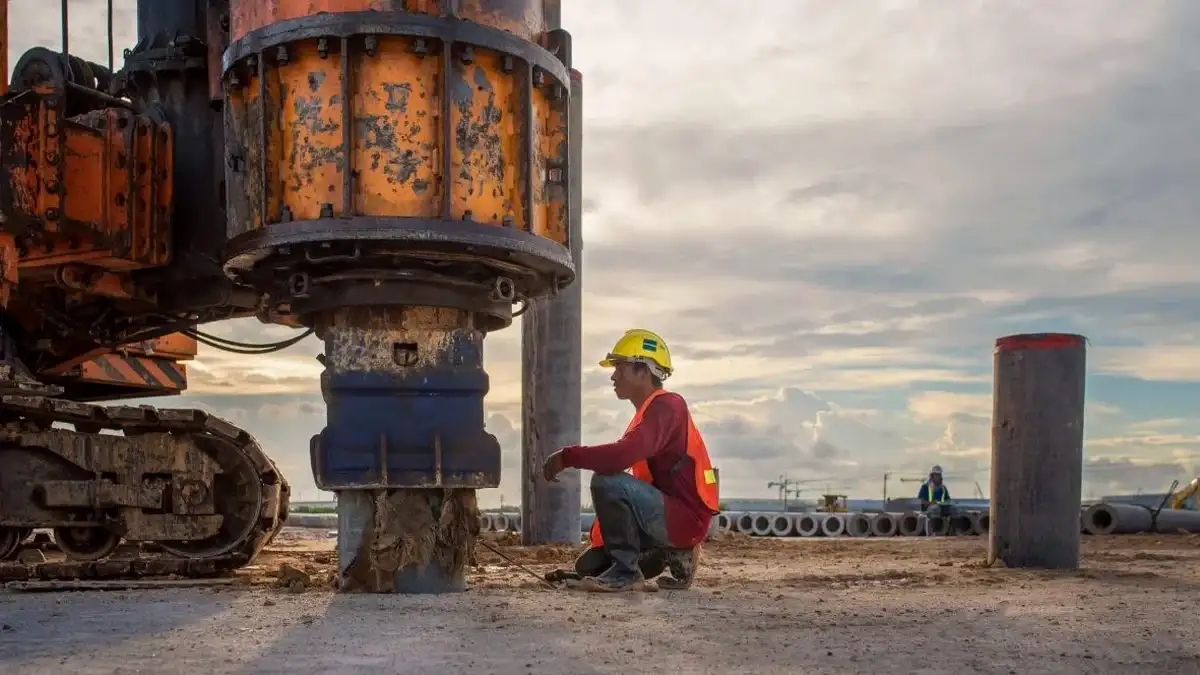
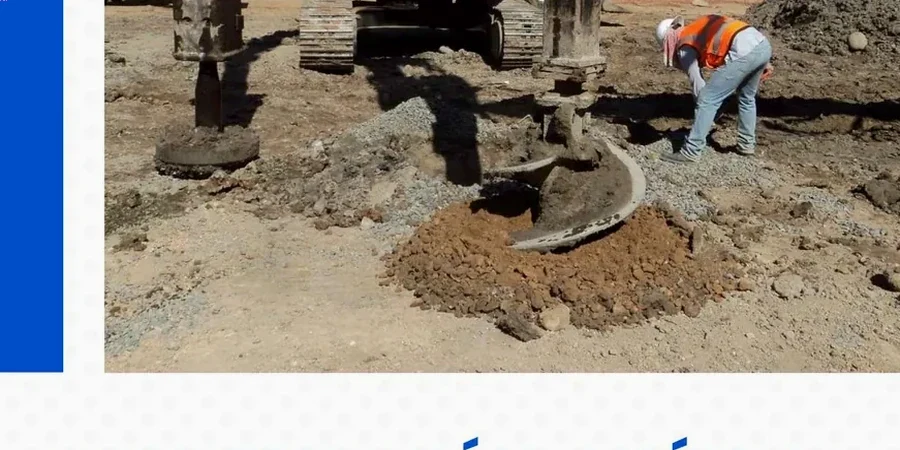
Foundation conditions in St. Catharines can shift dramatically within a single city block, a reality that becomes obvious when comparing the dense, stony till common along the escarpment brow with the soft, organic silts encountered in low-lying areas near Port Dalhousie. In the escarpment zones, we often use supplementary in-situ permeability testing to confirm that the stone columns will function as effective vertical drains without clogging from fine-grained migration, while the lowland sites frequently require a different vibratory probe configuration to penetrate a crusty desiccated layer before reaching the saturated clay at depth. The typical installation involves advancing a vibratory probe under compressed air to displace, rather than remove, the native soil, then backfilling with clean, angular aggregate in controlled lifts. This displacement effect is critical in St. Catharines because it raises the lateral stress state in the surrounding matrix, creating a composite material that can support strip footings or lightly reinforced raft slabs for structures ranging from three-story commercial buildings to municipal pump stations. Where the design requires quantifying the improvement in deformation modulus, a plate load test on a representative column provides direct load-settlement curves that validate the replacement ratio and column spacing assumptions used in the analytical model.
Stone Column Design in St. Catharines: Ground Improvement for the Niagara Clay Belt
Technical reference — St. Catharines

Local geotechnical context

A mid-rise condominium project on Ontario Street encountered a lens of high-plasticity clay at 4 meters depth that had not been fully captured in the preliminary borehole survey, resulting in differential settlement estimates exceeding 40 millimeters under the original spread footing design. The general contractor had already committed to a tight construction schedule and could not afford the delays associated with deep piled foundations or extensive over-excavation through the compressible layer. The project geotechnical engineer specified a grid of stone columns at 1.8-meter spacing to bypass the weak lens and transfer the structural load to the more competent till beneath, while simultaneously cutting the predicted settlement by more than half. This type of late-stage design adaptation is not uncommon in St. Catharines, where the glacial stratigraphy can be laterally inconsistent, and it underscores why a design team with local experience must review not just the average properties but also the potential for isolated soft pockets that can compromise the entire foundation performance if left untreated.

Need a geotechnical assessment?

Reply within 24h.

Email: info@geotechnicalengineering.co

Relevant standards

NBCC 2020 (National Building Code of Canada), CSA A23.3 (Design of Concrete Structures), ASTM D6913/D6913M (Particle-Size Distribution), OPSS 1004 (Aggregate Specification)

Technical parameters

ParameterTypical value
Typical Column Diameter0.6 to 1.2 m
Area Replacement Ratio10% to 35%
Aggregate SpecificationClean, hard, angular stone (OPSS 1004)
Design MethodUnit cell concept (Priebe, 1995) or finite element
Target Stress Reduction Factor2.0 to 4.0 for liquefiable silts
Installation Depth Range5 to 25 m below grade
Typical Post-Treatment Settlement< 25 mm for distributed loads

Questions and answers

What types of St. Catharines soil conditions benefit most from stone columns?

The soft to firm glaciolacustrine clays and silty clays deposited by glacial Lake Iroquois respond particularly well to stone column treatment. These soils, common throughout north St. Catharines and the valley floors, have undrained shear strengths in the 20 to 50 kPa range where vibro-displacement techniques can maximize lateral densification. The method is also effective in loose, saturated fine sands where the primary objective is liquefaction mitigation rather than settlement control.

What is the typical cost range for stone column design and installation in St. Catharines?

For a typical commercial or light industrial building footprint in St. Catharines, the combined design, mobilization, installation, and load testing costs generally fall between CA$2,070 and CA$6,090, depending on column depth, grid density, and the accessibility of the site for heavy vibratory equipment. Projects requiring deeper treatment to bypass thick soft clay layers or extensive verification testing will trend toward the upper end of this range.

How long does it take for the improved ground to be ready for foundation construction?

Once the stone columns are installed, the primary consolidation settlement in the treated clay occurs rapidly because the columns act as vertical drains, shortening the drainage path from meters to centimeters. In the St. Catharines silty clays, we typically observe 80 to 90 percent of the anticipated settlement within two to four weeks, allowing foundation concrete to proceed on a timeline comparable to a conventional shallow foundation project without the extended surcharge periods required by preloading alone.

Location and service area

We serve projects in St. Catharines and surrounding areas. More info.

View larger map