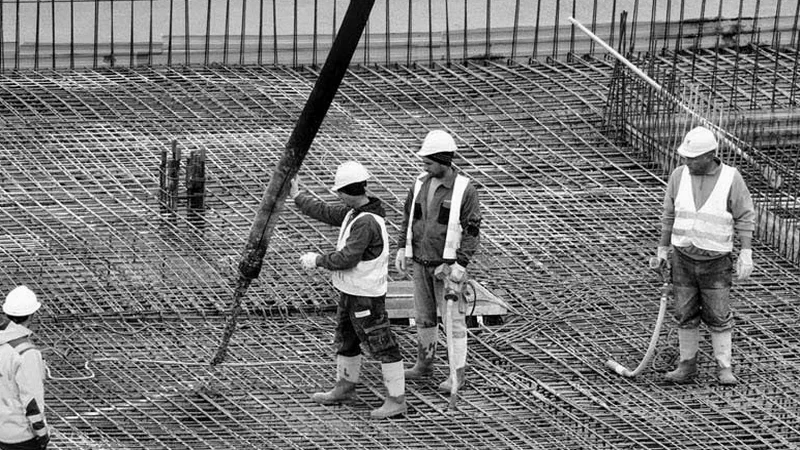
With a population exceeding 140,000, St. Catharines anchors the Niagara Region atop a complex stratigraphy of glaciolacustrine deposits that challenge conventional foundation solutions. The city’s post-glacial landscape, carved by the retreat of Lake Iroquois, left behind deep sequences of soft to firm silty clays interbedded with discontinuous sand lenses—conditions where differential settlement can compromise a structure before the superstructure is even framed. A properly designed raft/mat foundation distributes building loads across a broad, continuous footprint, reducing bearing pressures and bridging localized weak zones that isolated footings simply cannot manage. When the project brief includes a mid-rise residential block near the Twelve Mile Creek valley or a commercial facility on the tablelands south of the QEW, the team integrates in-situ data with finite element modelling to produce a raft/mat foundation design that respects both the Ontario Building Code and the operational budget. Complementing the geotechnical investigation with a CPT test clarifies the vertical extent of compressible layers, while triaxial testing on undisturbed Shelby tube samples defines the strength envelope needed for the soil-structure interaction model.
In St. Catharines, a well-designed raft foundation transforms the weak glaciolacustrine clay from a liability into a predictable, uniform bearing stratum.