GEOTECHNICALENGINEERING
ST. CATHARINES
HomeLaboratoryAtterberg limits

Atterberg Limits Testing in St. Catharines for Soil Classification

Practical geotechnics, field-tested.

LEARN MORE

In St. Catharines, we often see contractors surprised by how much a soil's behavior changes with just a few percent difference in moisture. The silty clay deposits along the Niagara Escarpment can shift from solid to unstable faster than you'd expect. That's where Atterberg limits testing becomes indispensable. We run these tests to define the liquid limit, plastic limit, and plasticity index of your site soil. The numbers tell us exactly how the material will react under load and during wet-dry cycles. For projects near the Lake Ontario shoreline or up toward the escarpment brow, we pair this data with a grain size analysis to complete the full classification picture before foundation decisions are locked in.

Plasticity index is the single most valuable number for predicting shrink-swell potential in Niagara regional clays.
Our service areas

Our approach and scope

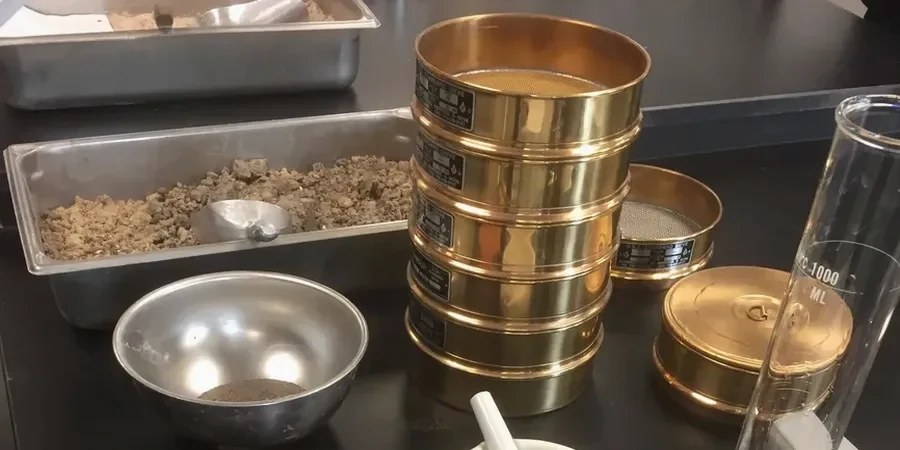
The glaciolacustrine clays common in St. Catharines—especially north of the QEW—often show medium to high plasticity. We see liquid limits ranging from 35% to over 60% in these deposits. The regional geology, shaped by glacial Lake Iroquois, left behind layered silts and clays that demand precise consistency measurement. Our lab follows ASTM D4318 for the multipoint liquid limit method. We use a Casagrande cup device calibrated to deliver exactly the right drop rate. Plastic limit is determined by the thread-rolling method at 3.2 mm diameter. The difference between these two values—the plasticity index—directly feeds into the Unified Soil Classification System. For slope stability concerns along the escarpment face, this data integrates with slope stability analysis to assess long-term erosion and failure potential.
Atterberg Limits Testing in St. Catharines for Soil Classification
Technical reference — St. Catharines

Local geotechnical context

We run the Casagrande cup device right here in our lab, with samples prepped from undisturbed Shelby tube specimens or bag samples taken during SPT drilling. The biggest risk in St. Catharines is misclassifying a lean clay as a silt because someone skipped the plastic limit test. That mistake leads to underestimating frost heave potential. The city sits in a zone with significant freeze-thaw cycling. A soil with a PI above 15% will behave very differently in February than a non-plastic silt. Getting the classification wrong means the foundation design might not account for seasonal volume change. Cracks appear. Walls shift. A standard penetration test gives you blow counts, but without Atterberg values, you're guessing at the soil's real nature. We've seen this play out in older subdivisions near the Welland Canal where differential movement cracked slabs within three winters.

Need a geotechnical assessment?

Reply within 24h.

Email: info@geotechnicalengineering.co

Relevant standards

ASTM D4318-17e1 (Standard Test Methods for Liquid Limit, Plastic Limit, and Plasticity Index of Soils), ASTM D2487-17e1 (Standard Practice for Classification of Soils for Engineering Purposes — Unified Soil Classification System), CSA A23.3-14 (Design of Concrete Structures — references soil classification for foundation design)

Technical parameters

ParameterTypical value
Liquid Limit (LL)Reported as moisture content % at 25 blows (Casagrande method)
Plastic Limit (PL)Moisture content % at 3.2 mm thread crumbling
Plasticity Index (PI)PI = LL - PL
Liquidity Index (LI)Calculated from natural moisture content
Test StandardASTM D4318-17e1
Sample RequirementMinimum 100 g passing No. 40 sieve

Questions and answers

What soil types in St. Catharines typically need Atterberg limits testing?

Any fine-grained soil—silts and clays—requires these tests. In St. Catharines, the glaciolacustrine deposits across the former Lake Iroquois plain are predominantly silty clays and clayey silts. We recommend testing for any project north of the escarpment where the surficial geology maps show these units.

How much does Atterberg limits testing cost per sample?

A single Atterberg limits suite (LL and PL) typically runs between CA$100 and CA$130 per sample. The price depends on sample quantity and whether we're also running a full hydrometer analysis for the grain size distribution.

Can you test samples from a project that already has borehole drilling complete?

Yes. If you have bag samples or Shelby tube specimens stored from a previous drilling campaign, we can run the Atterberg limits on that material. The sample just needs to be representative and properly sealed to preserve natural moisture content.

Location and service area

We serve projects in St. Catharines and surrounding areas.

View larger map