GEOTECHNICALENGINEERING
ST. CATHARINES
HomeInvestigationExploratory test pit

Exploratory Test Pit Services in St. Catharines

Practical geotechnics, field-tested.

LEARN MORE

The dense clay soils of the Niagara Escarpment create distinct challenges for any construction project in St. Catharines. Glacial till deposits and lacustrine silts shift dramatically across short distances here. You can hit compacted hardpan in one corner of a lot and soft, saturated clay just twenty meters away. An exploratory test pit cuts through the guesswork. It puts a geotechnical engineer directly at the soil face. Visual logging, hand sampling, and in-situ density testing happen right then and there. For projects near the Welland Canal or up on the escarpment bench, this direct observation often catches stratification issues that a borehole log might miss. When combined with in-situ permeability testing, the data becomes immediately actionable for foundation design and drainage planning.

A single exploratory test pit can reveal more about soil heterogeneity than three boreholes combined, especially in the glacial terrain of St. Catharines.
Our service areas

Our approach and scope

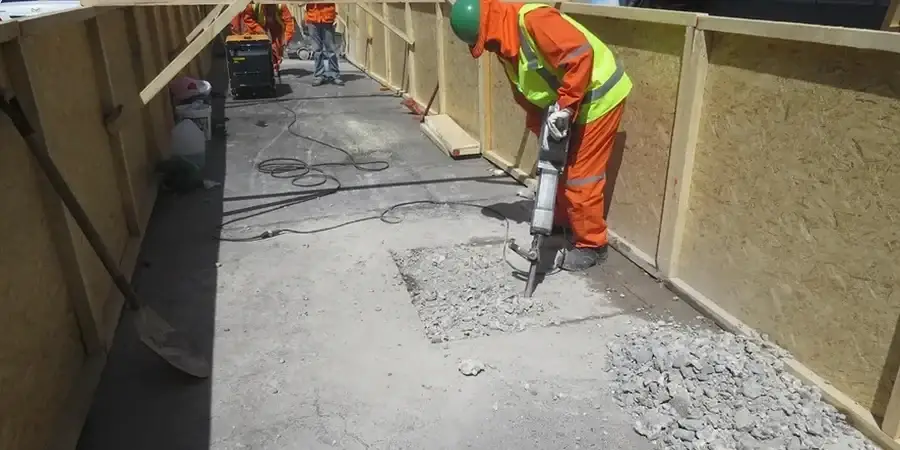
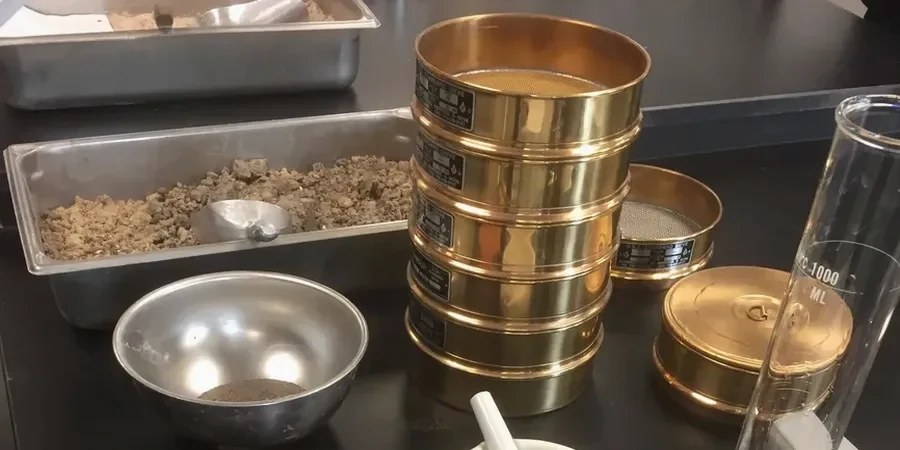
St. Catharines falls under the seismic and geotechnical provisions of the NBCC 2015, with specific reference to CSA A23.3 for concrete structures. The city's unique microclimate—moderated by Lake Ontario and Lake Erie—drives frequent freeze-thaw cycles that degrade near-surface soils. Our approach to exploratory test pit excavation follows a strict protocol. We dig to the planned footing depth plus an additional meter. We then log the stratigraphy, photograph the face, and extract undisturbed block samples where clay layers are intact. For granular zones, bulk samples go straight into sealed containers for grain-size analysis. When we encounter fill materials—common in downtown St. Catharines redevelopments—we flag it immediately. The pit also allows for direct plate bearing tests at the bearing elevation, giving you a real modulus of subgrade reaction instead of an estimated one from an SPT correlation.
Exploratory Test Pit Services in St. Catharines
Technical reference — St. Catharines

Local geotechnical context

The most common mistake local contractors make is skipping the test pit and relying solely on SPT data from a single borehole. In St. Catharines, the soil profile can flip within the footprint of a small building. You get a clay layer that looks competent in a split spoon sample, but the pit reveals it's riddled with root holes and desiccation cracks down to two meters. That's a settlement risk no one wants to own. Another failure point is missing old foundation remnants in areas like Port Dalhousie or Merritton. The city has gone through multiple building cycles since the 1800s. A buried stone foundation or an old cesspit won't show up on a compaction curve. It shows up when your footing formwork sinks. An exploratory test pit gives you the visual proof. No interpolation. No assumptions.

Need a geotechnical assessment?

Reply within 24h.

Email: info@geotechnicalengineering.co

Relevant standards

NBCC 2015 (National Building Code of Canada), CSA A23.3-14 (Design of Concrete Structures), ASTM D2488 (Visual-Manual Soil Description)

Technical parameters

ParameterTypical value
Typical exploration depth2.5 m to 4.5 m below grade
Standard pit dimensions2.0 m x 1.5 m (extendable)
Applicable standardNBCC 2015, CSA A23.3
Sampling methodUndisturbed block, bulk disturbed, Shelby tube from pit floor
In-situ tests availablePlate load, density, permeability, vane shear
Backfill protocolCompacted lifts with density verification
Report turnaround5-7 business days with full logs

Questions and answers

How deep can an exploratory test pit go in St. Catharines?

We typically excavate to 4.5 meters. That covers most residential and light commercial footing depths in the region. Deeper pits require shoring or benching per Ontario health and safety regulations. We engineer that on a case-by-case basis.

What's the cost range for a test pit investigation in St. Catharines?

A typical exploratory test pit runs between CA$670 and CA$1,090. The final number depends on access constraints, depth required, and how many in-situ tests you need at the pit floor.

How long does a test pit stay open on site?

Usually one day. We excavate in the morning, log and sample mid-day, and backfill in the afternoon. The backfill is placed in compacted lifts. We can leave the pit open overnight with secure fencing if your engineer needs extra time at the face.

Do you need locates before digging a test pit?

Yes. Ontario law requires a full utility locate before any excavation. We handle the locate request as part of our service. No locate, no digging—no exceptions.

Can you do a test pit inside an existing building?

It depends on headroom and access. We use a compact excavator for indoor work when the door opening and ceiling height allow it. For tight basements with restricted access, hand-dug inspection pits are an option, though depth is limited to about 2 meters.

Location and service area

We serve projects in St. Catharines and surrounding areas. More info.

View larger map