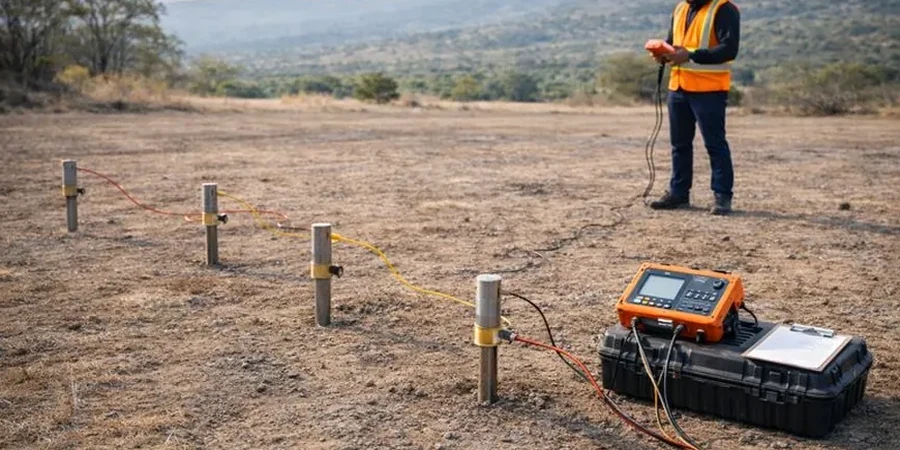
A multi-electrode resistivity array laid out across a St. Catharines site provides the clearest window into what lies beneath the surface without turning a single shovel. When we mobilize our 4-pin Wenner-Schlumberger spread across the clay plains and shale bedrock that characterize this city, we start seeing the electrical contrasts that separate dense Queenston Formation from overlying glacial till and saturated silts almost immediately. The method injects a controlled DC current into the ground and measures the resulting potential difference, building a vertical profile of apparent resistivity values that we then invert to true resistivity. For projects close to the Welland Canal or along the Niagara Escarpment, where groundwater pathways and bedrock depth vary sharply across short distances, this non-invasive technique often means the difference between a geotechnical model that catches a hazard and one that misses it completely. We combine the VES data with targeted CPT soundings when clients need direct correlation between resistivity anomalies and cone tip resistance in the dense clays common across the Garden City’s industrial corridors.
In the Niagara region, resistivity contrast between saturated Queenston shale and overlying glacial clays gives our VES soundings the signal clarity needed to map bedrock depth without excessive interpretation ambiguity.